


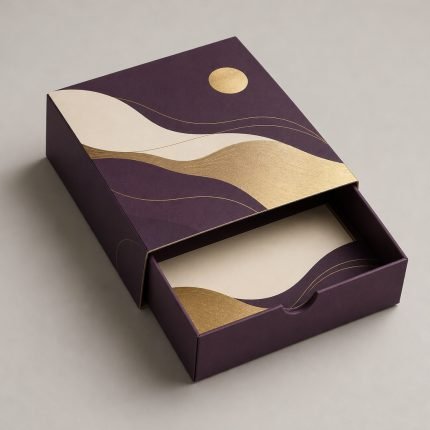
A carton whose base is pre-glued so it pops open and locks flat in one movement. No taping, no hand folding of the bottom at the filling line.
Where it fits
Food and confectionery lines running above roughly 30 packs a minute, or any operation where the cost of a person folding carton bottoms is the real problem. Also standard for bakery and ready-meal formats that need a flat, load-bearing base.
What you can specify
- Dimensions — built to your product, no fixed size range.
- Board — 300–400 gsm FSC-certified folding boxboard (GC1 or SBS); the crash-lock base needs a stiffer sheet than a tuck-end of the same size, usually 350–400 gsm.
- Printing & finish — offset CMYK plus Pantone. Avoid heavy coverage across the base creases — cracked coating on a crash-lock fold is the most common print defect on this structure.
- Structure — crash-lock auto bottom, pre-glued and shipped flat; the base locks open without adhesive at the filling line.
What decides the price
The die. A crash-lock base needs a more complex cutting and creasing tool than a tuck-end, so the tooling cost is higher and only pays back above a certain annual volume. Under that, a tuck-end with manual bottom folding is cheaper overall.




Reviews
There are no reviews yet.