A production floor built around custom orders
Tooling, printing, forming and quality control sit in one place, which is what makes a short custom run practical rather than a scheduling problem.
What is actually in the building
7,200 m² across six floors, and every step of the four lines happens inside it — no outsourcing of forming, printing or assembly.
| Line | Made in-house | Capacity |
|---|---|---|
| Plastic boxes | Sheet extrusion cleaning, thermoforming, die-cutting, printing, assembly | 300,000 boxes per month combined |
| Plastic cylinder boxes | Forming, seaming, end-cap fitting, printing | |
| Blister packaging | Forming, card printing, sealing, die-cutting | |
| Paper boxes | Printing, lamination, die-cutting, creasing, gluing, hand assembly |
Why this matters when you compare suppliers: a factory that outsources forming can quote faster and still deliver late, because the schedule it gave you was never entirely its own. When everything sits in one building, a hold-up in one line is something we can see, reschedule and tell you about the same day.
It also means the people who quote your job can walk to the machine that will run it. Most specification arguments end there.
What happens on site
Tooling
Moulds, cutting dies and print plates made to the approved drawing — the stage that fixes whether the finished box matches the sample.
Printing
Offset, screen and digital presses, with colour checked against an approved proof rather than against a screen.
Forming
Thermoforming, cutting, creasing, folding and gluing, plus lamination, foil and windowing where the pack needs them.
Assembly
Inserts fitted, lids matched to bases, and multi-part packs assembled before packing — not left for the buyer to combine.
Quality control
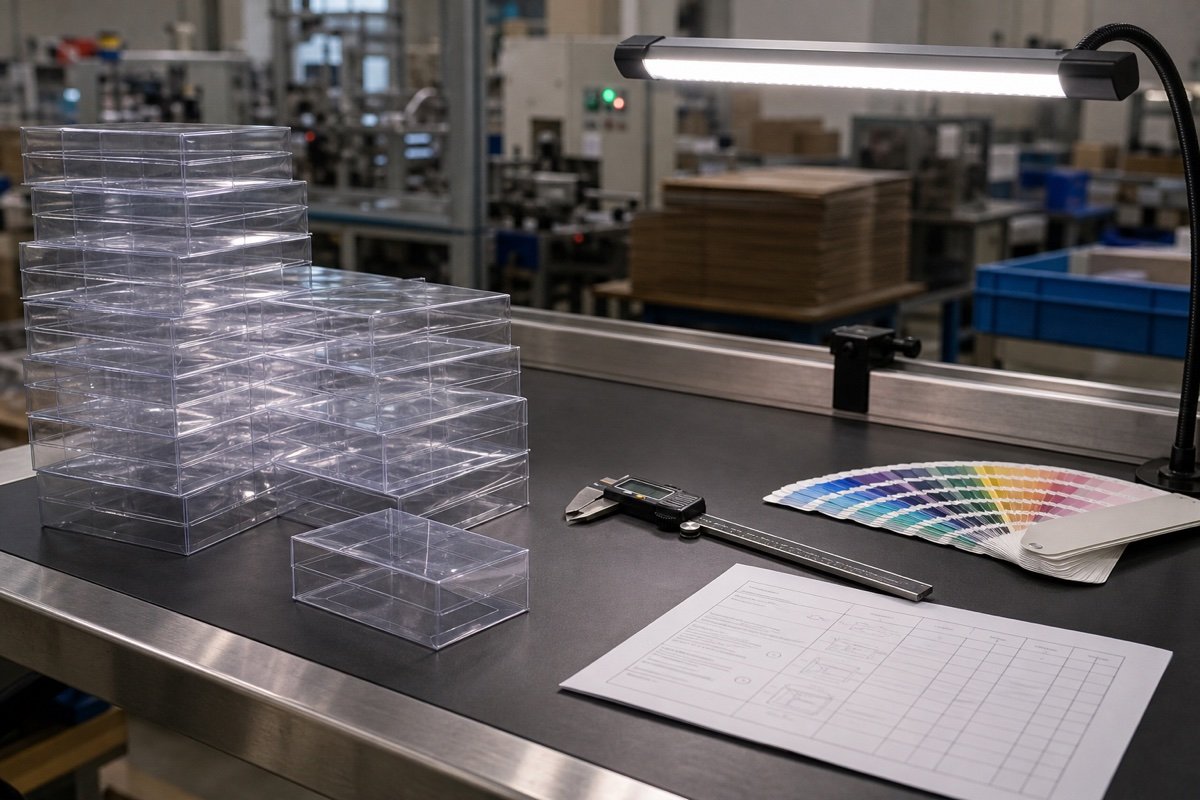
Inspection for print registration, colour, dimensions, lid fit and surface defects, with faults sorted before packing.
Packing & dispatch
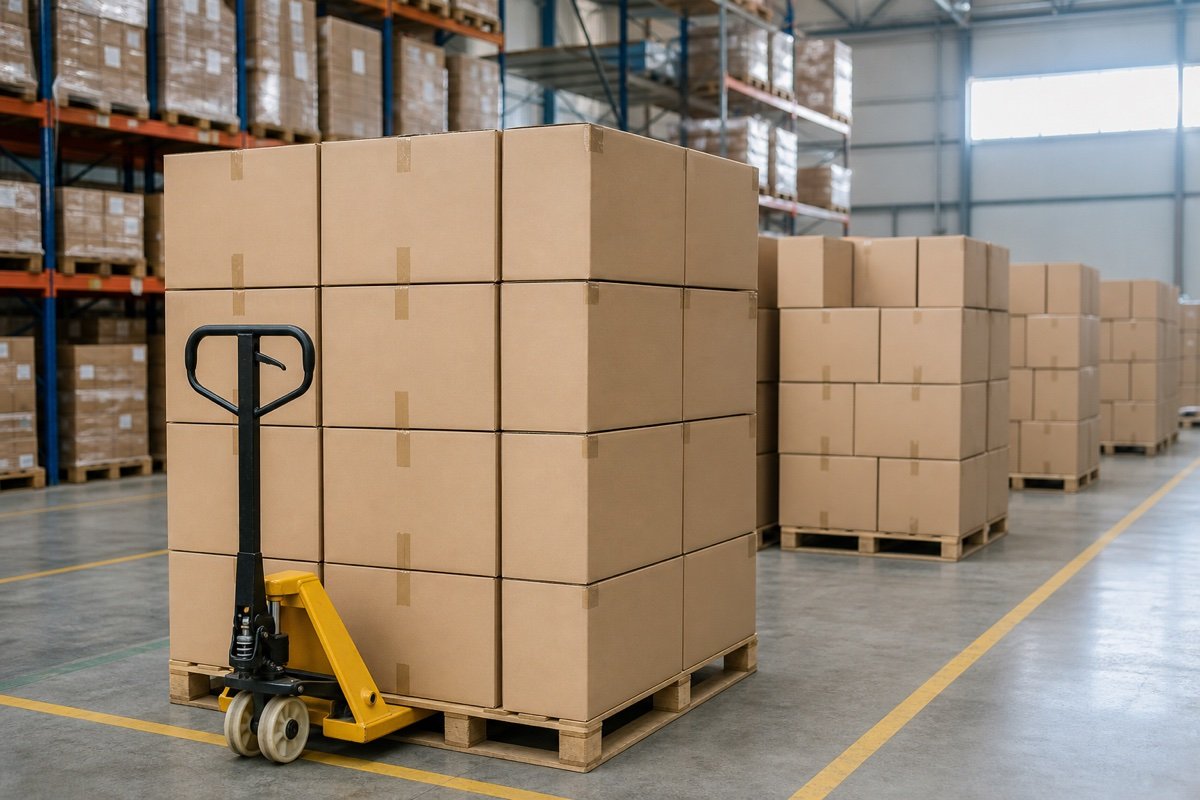
Export cartons, OPP bagging, dividers and palletising, with a packing list issued against the order.
Why the layout matters to a buyer
When tooling, printing and forming are separated across suppliers, every change of specification becomes a handover — and every handover is a place where a dimension or a colour drifts. Keeping the stages together is the reason a size change between two orders can be handled without re-quoting the whole project.
It also means a fault found at forming is corrected before packing instead of being discovered by the buyer. The stages are sequenced so that the cheapest possible correction point is used for each type of error.
Visiting and verification
Buyers who need to verify capacity, equipment or compliance before placing a first order are welcome to arrange an inspection, or to send a third-party auditor. Documents relevant to the materials supplied — test reports and material declarations — are provided with the quotation where they exist for that grade.
Qualifying a new supplier?
Ask for what your process requires — documents, a sample, or a video walk-through of the line that would run your job.
Where the work actually happens
Three places every order passes through. The machine photos above are the making; these are the checking, the packing and the waiting-to-ship.