
The machines behind each specification
Seven processes, each solving a specific problem in plastic and paperboard packaging. What follows is what each one does, and why it matters to the box you receive rather than how it is built.
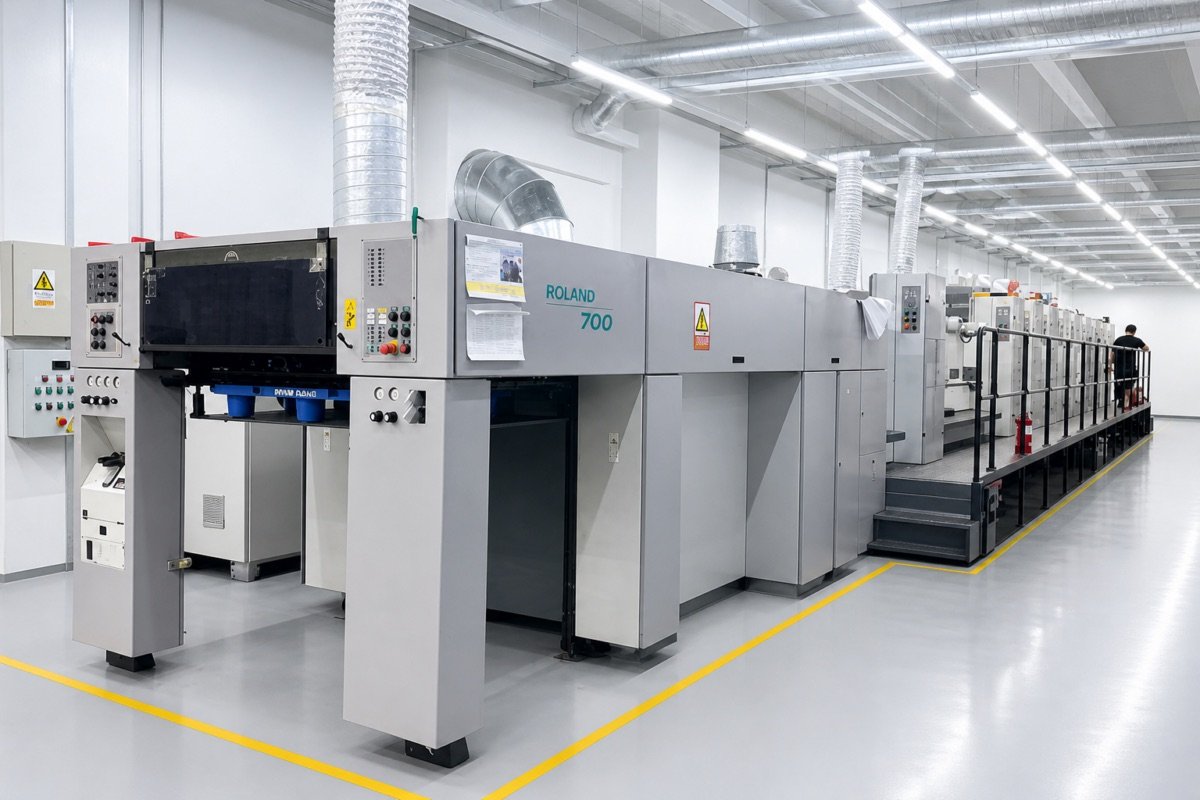
UV Printing Machine
Cures ink instantly under ultraviolet light instead of drying it with heat.
The practical effect is that we can print high-resolution graphics directly onto PET, PVC and paperboard and have them harden before the sheet leaves the machine. Ink bonds to non-porous plastic rather than sitting on top of it, so the print resists scratching and moisture. It also means short runs are viable — there is no heat drying cycle to justify with volume.
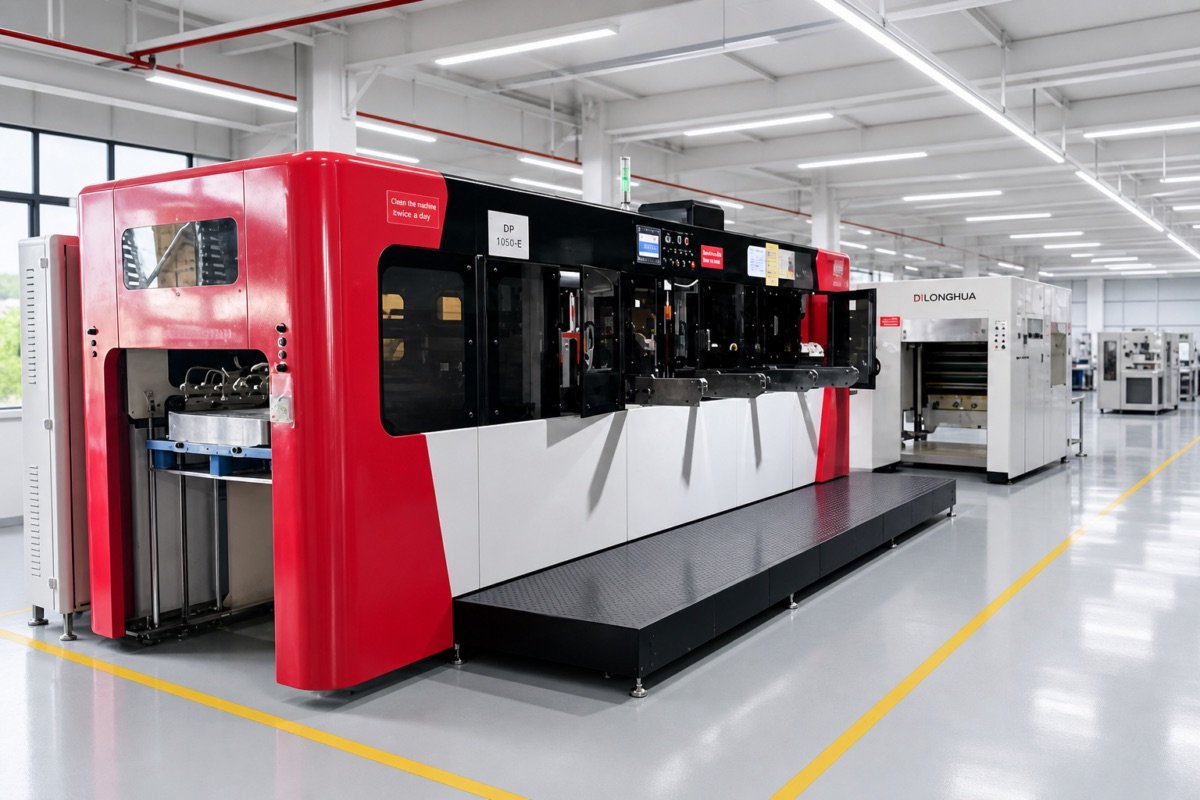
Soft Crease Folding Machine
Puts a fold line into plastic without cracking or whitening it.
Hard scoring works on paperboard; on PET and PVC it fractures the material along the line, which is where a box splits first. Soft creasing presses a rounded line instead, and the plastic folds cleanly while keeping its strength. This is the machine that makes a plastic box with a crisp edge and a lid that closes squarely possible at all.

Automatic Die-Cut Machine
Cuts, creases and perforates a sheet in one pass against a custom die.
The die is made to your drawing, so the blank, the fold lines and any hanging hole come out in one operation with consistent dimensions across the run. Automatic registration and stripping keep the cut aligned to the printed artwork — which is what stops a window or a logo drifting off-centre over ten thousand units.
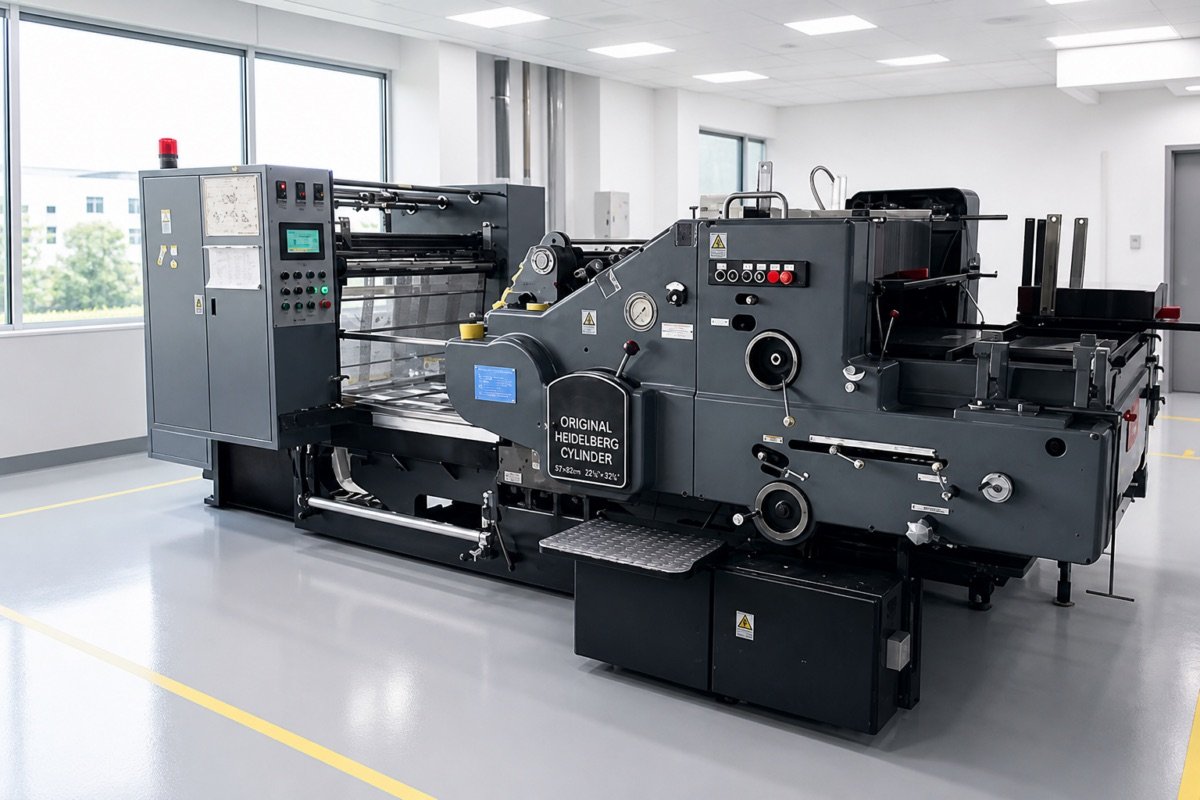
Hot Stamping Machine
Applies metallic or pigmented foil under controlled heat and pressure.
Used for a logo or a single line that has to read as metal rather than as printed gold. Temperature and pressure are set so the foil releases cleanly without warping the sheet — the difference between a sharp mark and a blurred one is usually a few degrees. The same machine can blind-emboss for a tactile effect with no foil at all.
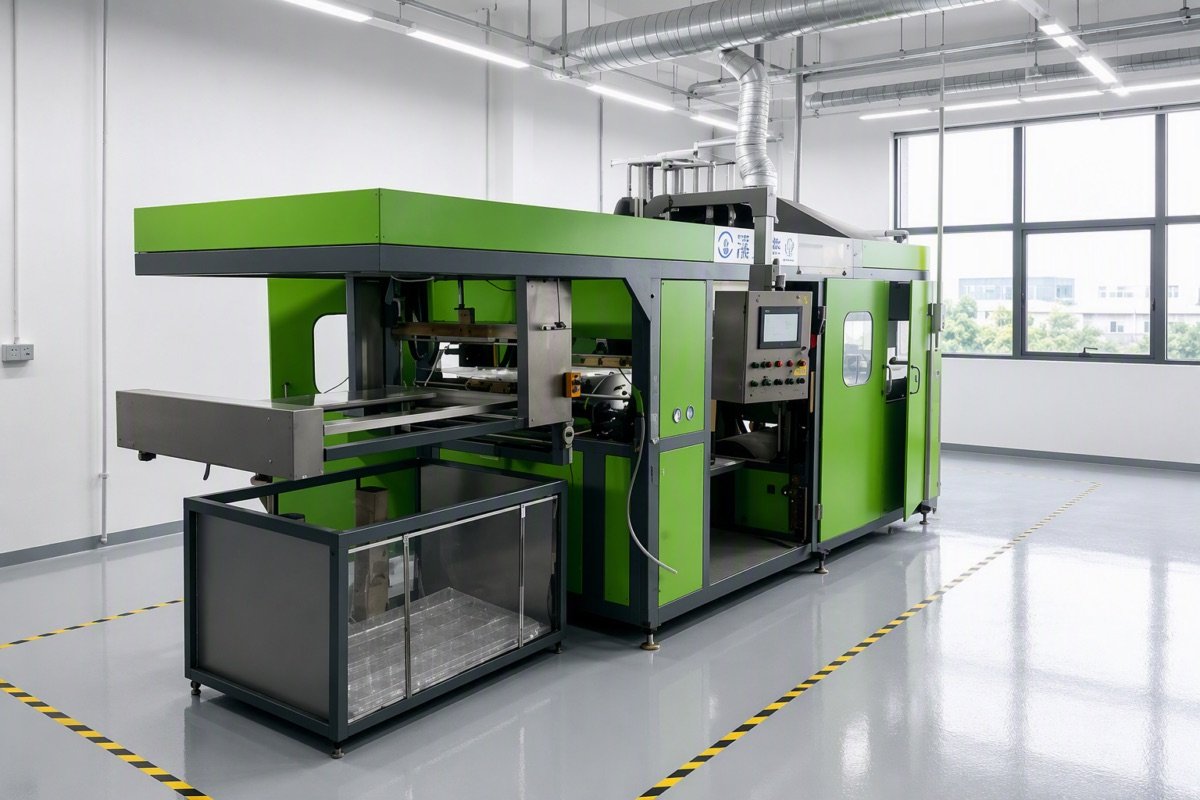
Automatic Forming Blister Machine
Heats the sheet and forms the cavity over a mould.
Feeding, heating, forming, cooling and cutting run as one cycle, which is what keeps cavity depth identical from the first unit to the last. For a product that has to sit in its blister at a fixed angle, that repeatability is the whole specification. Sealing stations can be integrated so the blister bonds to the card in the same pass.
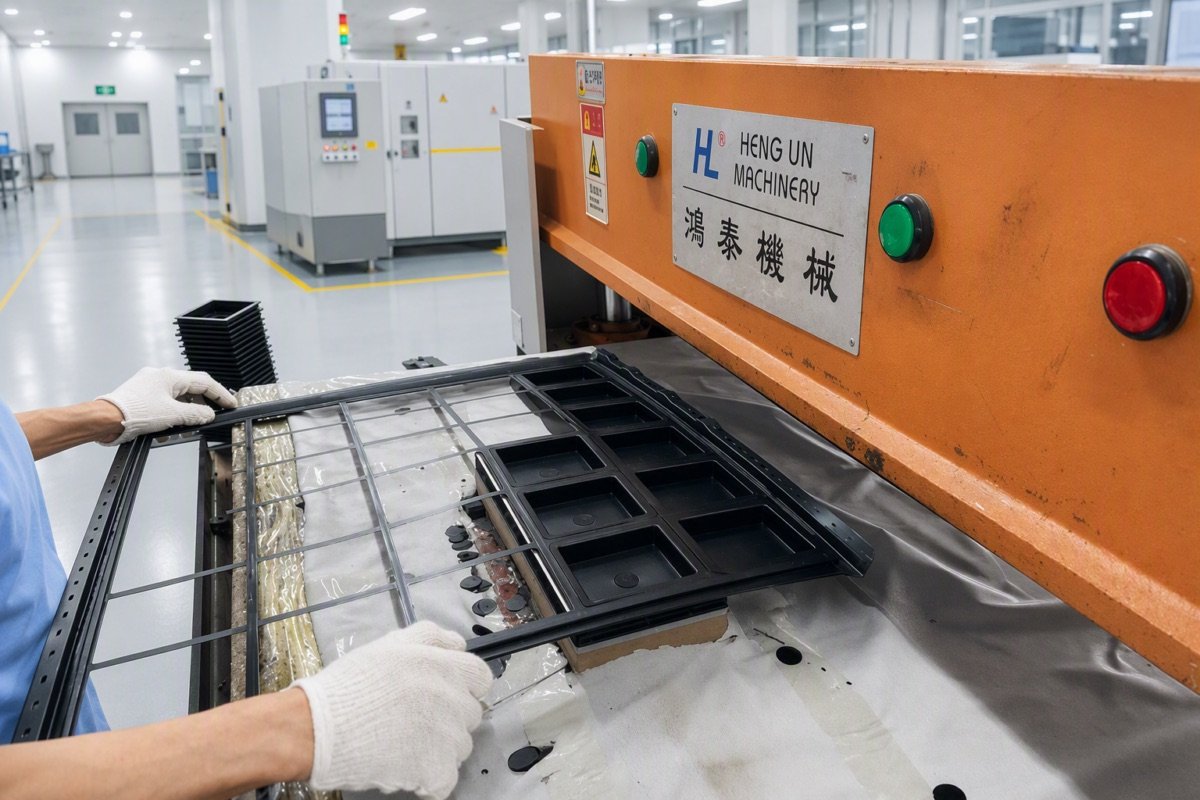
Punching Machine
Cuts hanging holes, ventilation slots and tear-open features.
Retail decides most of these: a Euro hole for a peg, a slot for a shelf tray, a perforation for a tear-open. Punching them in a dedicated operation keeps the position identical relative to the print, which matters when the customer planogram expects the hole in the same place on every unit.
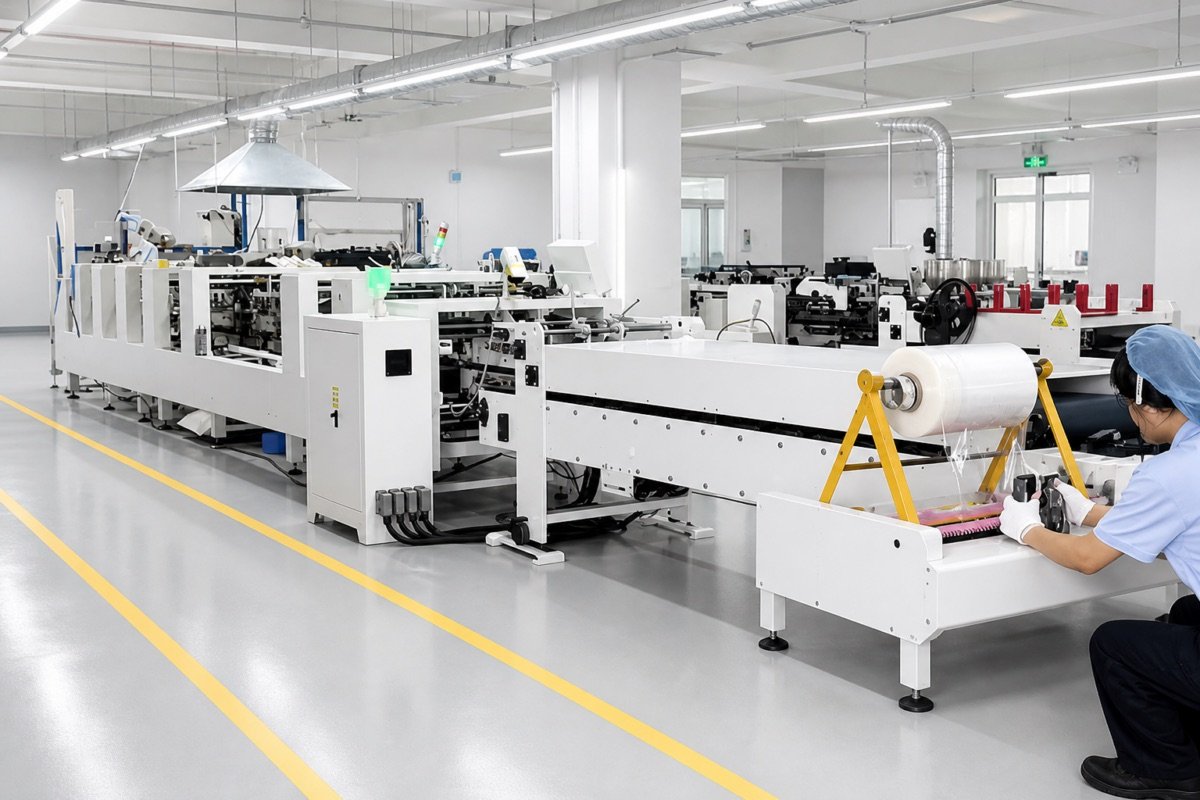
Gluing Machine
Applies adhesive to flaps, side seams and insert tabs.
Glue lines are the joints that fail silently — a box that holds in the factory and opens in transit is almost always a gluing problem, not a board problem. Controlled application, pressure and curing give a consistent bond between plastic and plastic, or between plastic and a paperboard card, without excess adhesive squeezing out at the seam.
Inks
The ink choice follows the market the pack is sold into, not a house preference. All six are available on the same presses.
| Water-based Ink | Water and pigment. The default where a buyer needs a lower-solvent print and food-adjacent packaging is involved. |
|---|---|
| Soy / Vegetable Ink | Soy or vegetable oil and pigment, for a print that supports an environmental claim without changing the press setup. |
| Fluorescent Ink | Bright and opaque, for promotional packs that have to compete for attention on a shelf under mixed lighting. |
| Oil-based Ink | The conventional option, where colour intensity matters more than the solvent profile. |
| Pantone Matching | A mixed ink matched to your reference, so a brand colour is the same on a plastic box as it is on a carton. |
| Pantone Metallic | A metallic mixed ink, where hot stamping is not suitable for the geometry or the volume. |
Food-contact and recycled-content prints are specified with the material, not after it: the ink and the substrate have to be declared together for the documentation to be worth anything.
Tell us the constraint, we will name the process
Cracking on a fold, a logo that has to read as metal, a cavity that must hold a fixed angle — each of those points to one machine, and to one line in the quotation.